
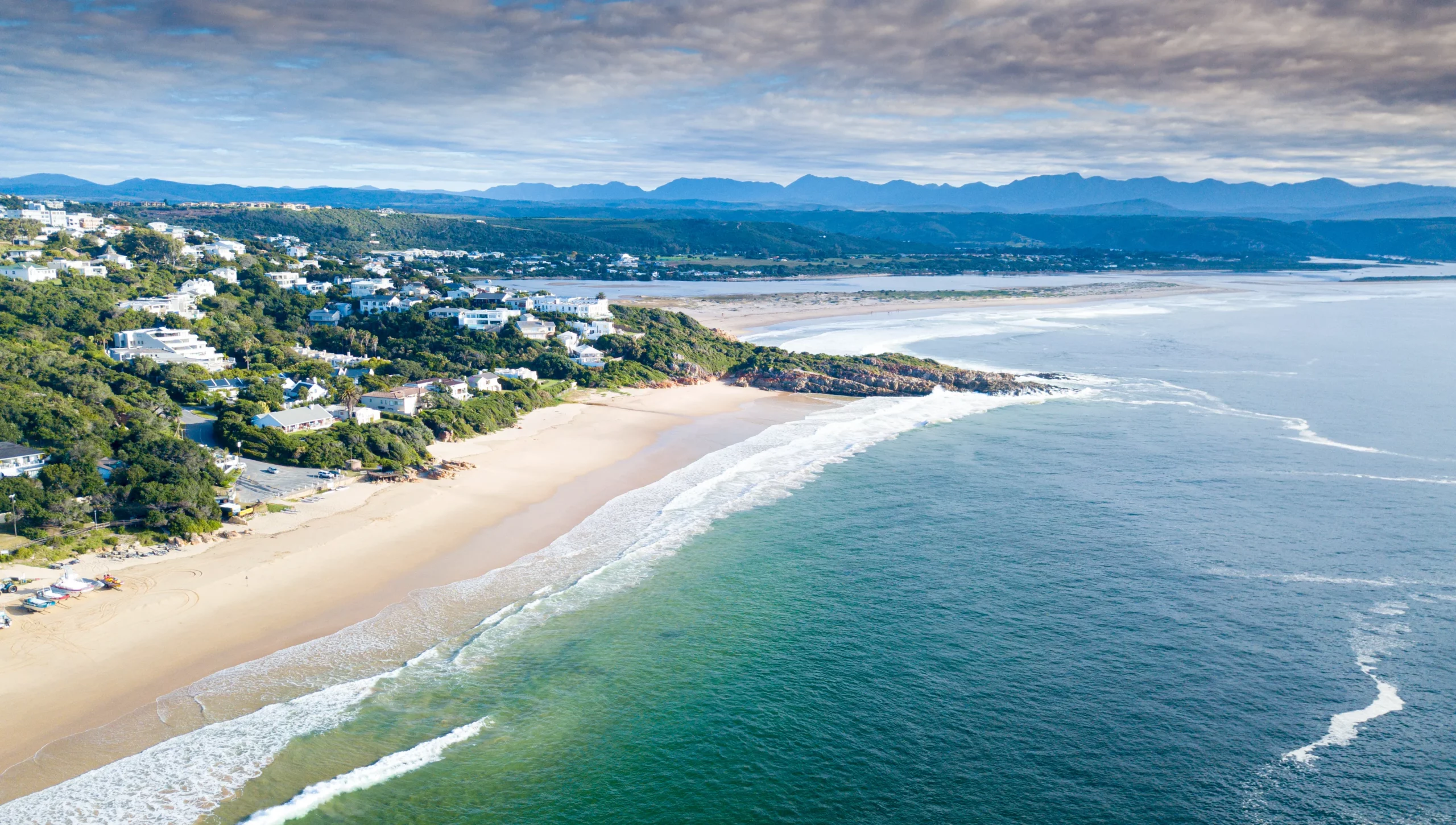
Before The Bungalow, there was the beach. The milkwood trees. The bay. And the particular light that falls on Hobie Beach at the end of a Plett afternoon.
Plettenberg Bay is the kind of place people don't just visit. They come once, usually by accident,a detour on a Garden Route road trip, a friend's recommendation, a week that was only supposed to be a weekend,and then they spend the rest of their lives finding reasons to come back.
The coast here is not dramatic in the way that demands your attention. It is persistent. The Indian Ocean arrives at Hobie Beach in long, low swells. The milkwood trees line the beachfront the way they have for centuries, roots gripping the dunes, canopies filtering the light into something particular and unhurried.
The Robberg Peninsula curves out into the sea in the middle distance, always visible, always the same. Plett doesn't show off. It just keeps being itself until you realise you've stopped wanting to be anywhere else.
At The Wedge, the body-boarding break on the main beach, surfers have been reading the water since before anyone thought to name it. At the Lookout, the view across the bay is the same one that stopped people in their tracks two hundred years ago. This is a coast with its own long memory, and it was here, in this specific place, that The Bungalow took shape.
The building at 5 Meeding Street had the best address in Plettenberg Bay. Right on the beachfront. Right under the milkwood trees. The kind of position that might have become a resort behind a fence, a property optimised for maximum rooms and minimum personality.
Instead, the people who built The Bungalow made a different decision. They asked what it would mean to create somewhere that felt less like a hotel booking and more like borrowing a friend's extraordinary beach house,except the linen would be better than your own, the bar would be stocked in a way yours never quite is, and the staff would care in the way that good friends do: genuinely, without performance.
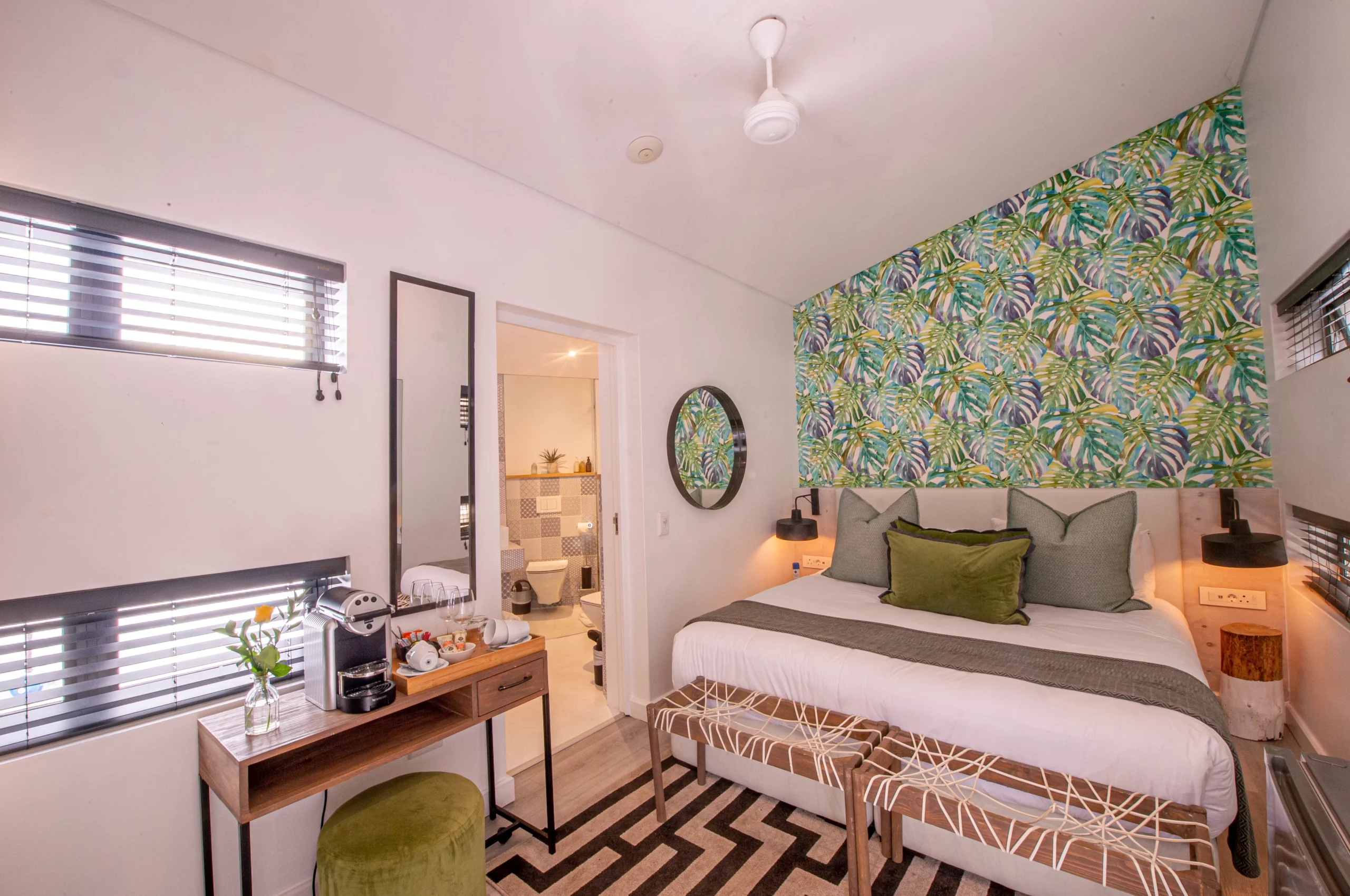
The result was a boutique beachfront property unlike anything else in Plettenberg Bay. Not a guest house. Not a resort. A bungalow, in the original sense of the word: a place designed for living, built low and close to the ground, connected to the outside rather than insulated from it. A place where the ocean is not a view from a window but a presence you can hear from every room.
The philosophy was deliberate: luxury should feel effortless. It should be in the quality of the cotton on the bed, in the way the afternoon light catches the upper deck, in the fact that breakfast runs until eleven because there is nowhere urgent to be. It should not announce itself. It should simply be there, like the milkwood trees, like the sound of the surf,constant, unhurried, entirely at ease with itself.
Every room is named after something real.
The Hobie Suite is named for Hobie Beach, the heart of Plettenberg Bay's coastal playground, where the beach volleyball nets go up in summer and the water stays warm well into autumn. The Wedge takes its name from the break on the main beach where the ocean floor creates that particular standing wave that bodyboarders have been working on since they can remember. The Lookout is named for the headland view: the long sweep of the bay, the peninsula, the place where the horizon seems further away than it should.
The Pods. The Cliffside rooms. The Family Villa. Each one has a specific relationship with a specific angle of the coast.

This was not an accident of naming. It was a decision,a small, deliberate act of place-making that said: we know where we are, and we want you to know it too. In a world of Deluxe Doubles and Superior Kings, giving each room the name of something real in the landscape outside was a way of refusing anonymity. A way of saying that this hotel exists in a particular place, and that the place matters.
When you sleep in The Hobie, you are sleeping in a room that belongs to the beach it looks at. When you wake up in The Wedge, the name on your key is the name on the wave. That's not branding. That's attention.
The milkwood trees did not come with the building.
They were already here, ancient, indigenous, deeply rooted in the dune soil beneath the beachfront properties. Sideroxylon inerme, if you want the scientific name, but everyone who has ever sat beneath one simply calls it a milkwood.
They grow slowly, and they live long, and the canopy they create is unlike the shade of any other tree: dense enough to cool the air beneath it on a hot Plett afternoon, but open enough to let the sea breeze through.
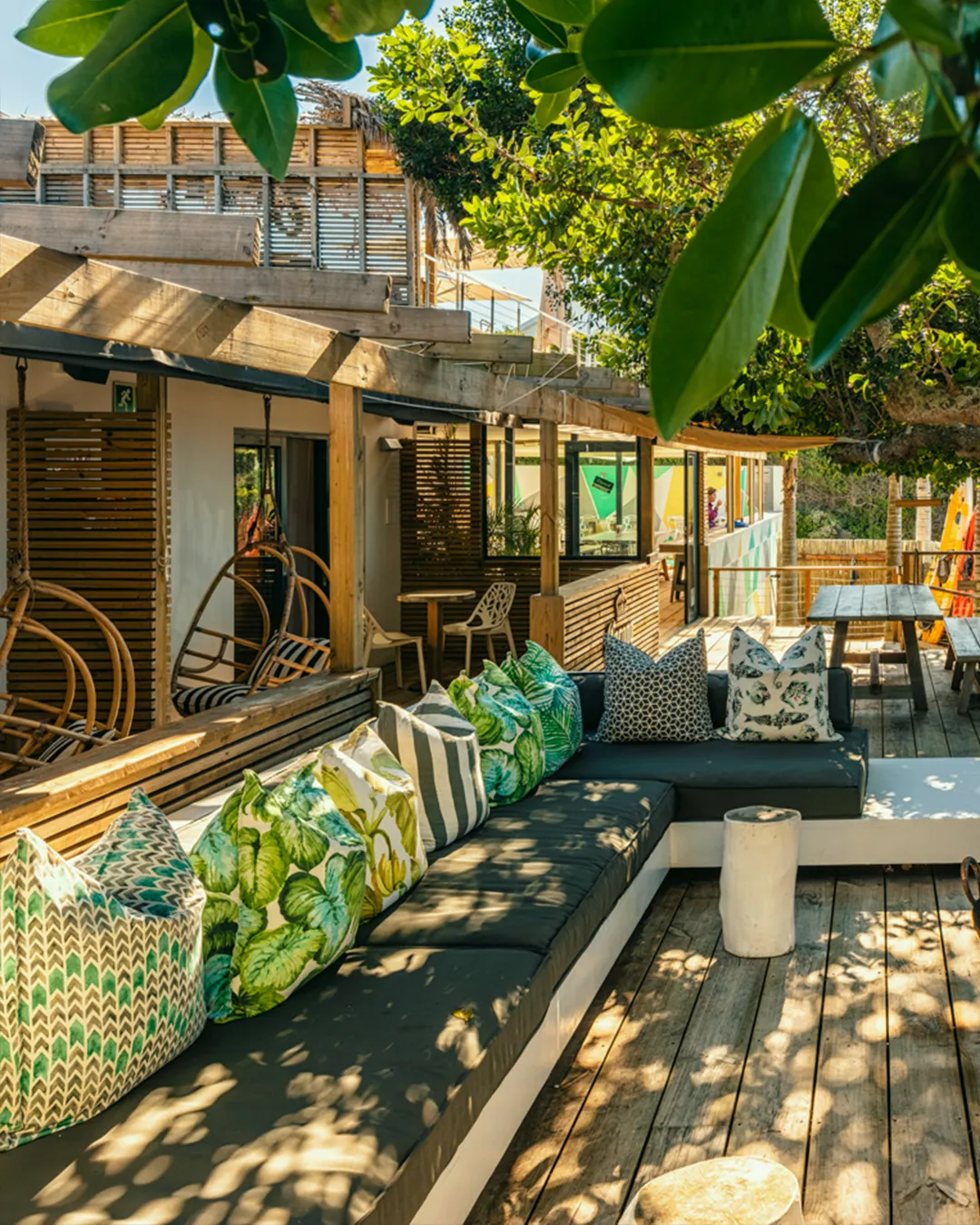
The sea-facing viewing deck at The Bungalow sits beneath this canopy. On a summer afternoon, with the ocean in front of you and the milkwood leaves shifting above, it is one of the genuinely good places in the world to do nothing. The bar is close. The loungers are comfortable. The trees are not going anywhere.
The garden that surrounds the property has won awards, which is not something anyone set out to achieve; it happened the way good things usually happen,through consistent care and an honest respect for what was already growing in the ground. These are old plants in old soil, and they ask to be taken seriously.
Every guest who sits under the milkwood canopy is sitting in a place that existed long before The Bungalow had a name, and will exist long after all of us are done with it. That continuity is not incidental to the experience here. It is the experience.
In 2024, The Bungalow became part of the Raw Africa Boutique Collection,a curated portfolio of South African properties selected not for size or star rating but for a shared quality that is harder to name: they are places with a genuine point of view.
Properties that know what they are and don't apologise for it. Properties where the hospitality is personal, the setting is irreplaceable, and the standard of the experience is held to account by people who care.
For The Bungalow, joining the Collection meant belonging to something larger without becoming something different. The identity here,the milkwood canopy, the named rooms, the conviction that luxury should feel easy,remained exactly as it was. What changed was the company: a wider family of properties that believe in the same things, across different landscapes, for the same kind of traveller.
Discover the CollectionPlettenberg Bay sits on the Garden Route, the stretch of South Africa's southern coastline that runs between George and Storms River and contains, in the space of a few hundred kilometres, more varieties of landscape than most countries can offer in their entirety. Forests and fynbos. Lagoons and cliffs. Mountains that end in the sea.
Plett itself is something specific within all of that. It is simultaneously a surf village and a luxury destination, a family holiday town and a place where European travellers come back year after year because they cannot quite explain what it does to them. It is small enough to walk across and large enough to never feel the same twice. It has whales in season and dolphins whenever they feel like it, which is most of the time.
The Bungalow did not create any of this. It found it, recognised it, and made something that tries to be worthy of it. A boutique beachfront hotel that takes its name from the building type, its room names from the breaks on the beach, its design cues from the coast itself, and its purpose from a simple belief: that this particular stretch of South African shoreline is one of the finest places in the world to stop and be still for a while.
We built a hotel around that belief. We stand by it.
Every room at The Bungalow has its own name, its own view, and its own relationship with the coast.
Explore Accommodation